How Moroccan Food is Made
Clay tagines. Twice-steamed couscous. Hand-wrapped pastilla. Saffron, preserved lemon, ras el hanout. Traditional Moroccan cooking techniques — served at Moltaqa, Yaletown, Vancouver.
The clay tagine pot
The keskas steamer
Ras el hanout spice blend
Preserved lemon & olives
Slow heat. No shortcuts.
The techniques behind
authentic Moroccan cooking
Moroccan cooking is built on a few fundamental methods: slow heat, aromatic spice layering, and vessels designed over centuries to concentrate flavour without adding fat. The tagine pot — a clay cone — creates a self-basting environment where steam rises, condenses on the lid, and falls back over the ingredients continuously.
Couscous is steamed, not boiled — traditionally twice in a couscoussier or keskas, over a fragrant simmering broth below. This process keeps each grain separate and gives the dish a light, airy texture that boiling cannot replicate. It is one of the most technically demanding preparations in the Moroccan kitchen.
The spice foundation of most Moroccan dishes begins with cumin, turmeric, ginger, coriander, cinnamon, and saffron — used in ratios that vary by region and family tradition. Preserved lemon and oil-cured olives add tartness and depth. Together these elements create a flavour profile that is warm, layered, and distinct from both European and Middle Eastern cuisine.
Four pillars of
Moroccan cuisine
Each dish represents a different cooking technique — clay-pot steaming, double-steamed grain, hand-wrapped pastry, and long-simmered broth. These are the foundations of the Moroccan table.
The Tagine
Lamb · Chicken · VegetableSlow-cooked in a traditional clay pot. The cone-shaped lid creates a continuous condensation cycle — steam rises, cools, falls back, basting the ingredients without any added fat or oil. The meat falls off the bone. The vegetables hold every bit of flavour. Preserved lemon, olives, cumin, turmeric, ginger, saffron.
Our most ordered dish. Available in lamb, chicken, and vegetable.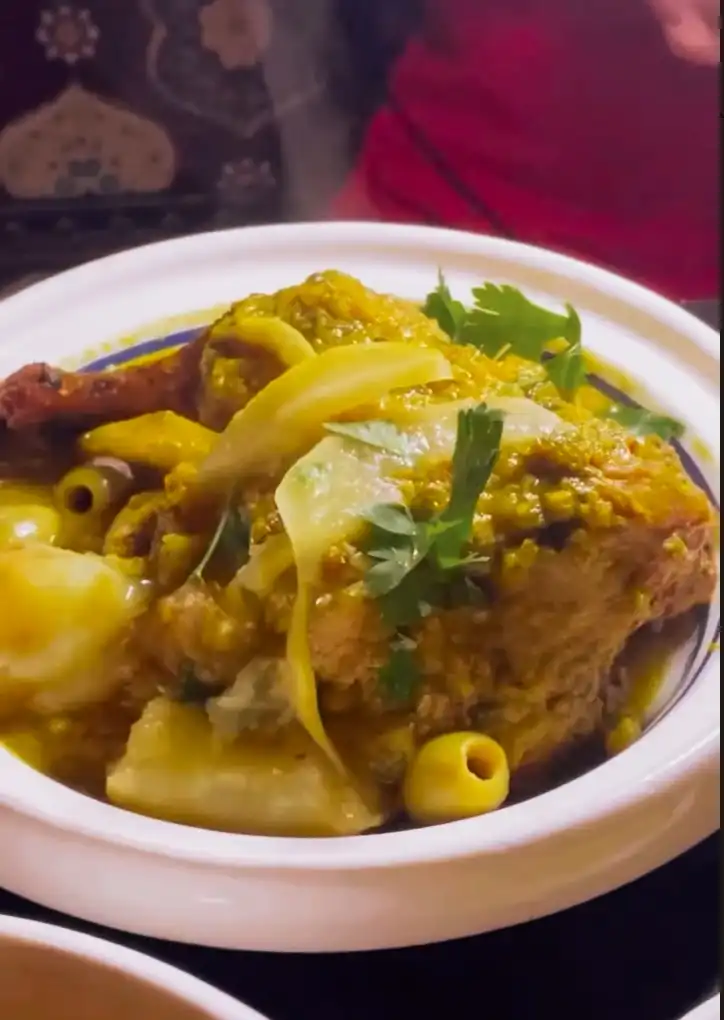
Couscous
Hand-rolled · Steamed TwiceHand-rolled and steamed twice, the way it's done in a Moroccan home. Served with slow-braised vegetables, chickpeas, and your choice of lamb, chicken, or fully vegetarian. Rich, fragrant, genuinely filling — the kind of dish that stays with you.
The vegetable version is fully vegan.
Chicken Pastilla
A Dish Worth OrderingSpiced chicken, toasted almonds, and egg wrapped in flaky warqa pastry, finished with cinnamon and icing sugar. Sweet and savoury at the same time. One of Morocco's oldest dishes and one of the hardest to find made properly in Vancouver. Ours is assembled by hand, every day.
Order it. Most people who try it for the first time order it again.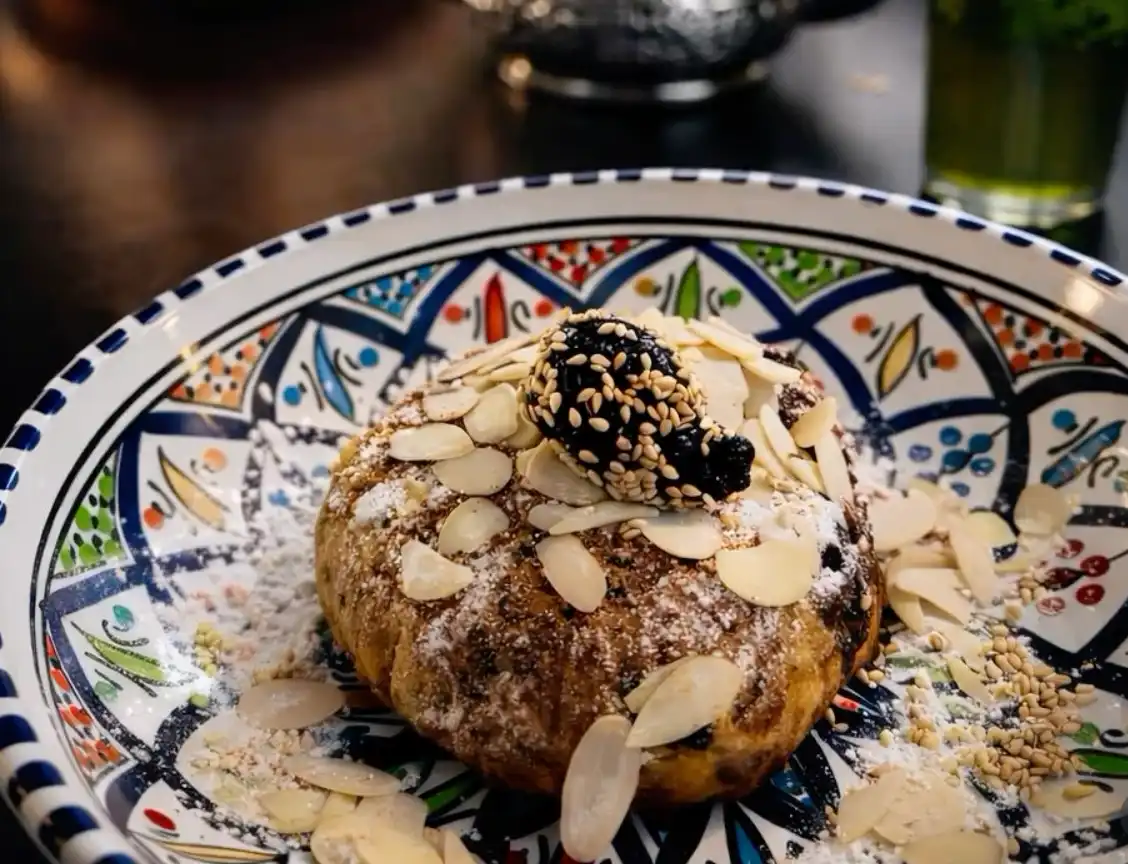
Harira Soup
Morocco's Classic · VeganTomatoes, lentils, chickpeas, vermicelli, and a broth built from coriander, parsley, and warm spices. Harira is the soup Moroccan families have been making for centuries — warming, sustaining, and completely plant-based.
A good way to start. Ask for the Moroccan bread alongside.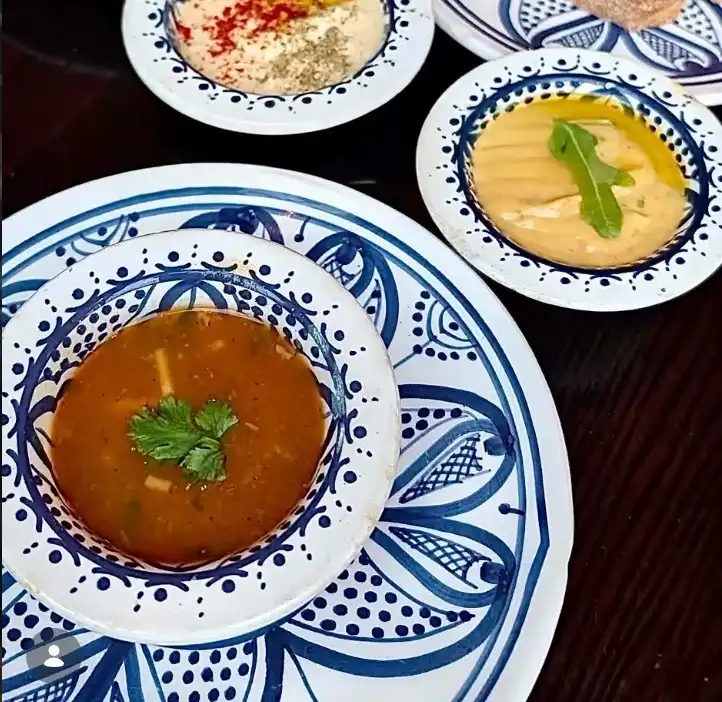
Entirely halal,
no exceptions
Finding halal food in downtown Vancouver that goes beyond the basics is harder than it should be. At Moltaqa, halal certification applies to everything on the menu — not selected dishes, not most items. Everything.
All our meat is hormone-free and antibiotic-free. If you have questions about any dish or ingredient, our staff can walk you through it.
in Vancouver
Plant-based cooking has always been
part of the Moroccan table
Dishes like harira, zaalouk, and vegetable tagine predate the modern vegan movement by centuries. The spice-forward, broth-based cooking style of Morocco means vegetables develop deep, layered flavour without any meat — not as a compromise, but as the original recipe.
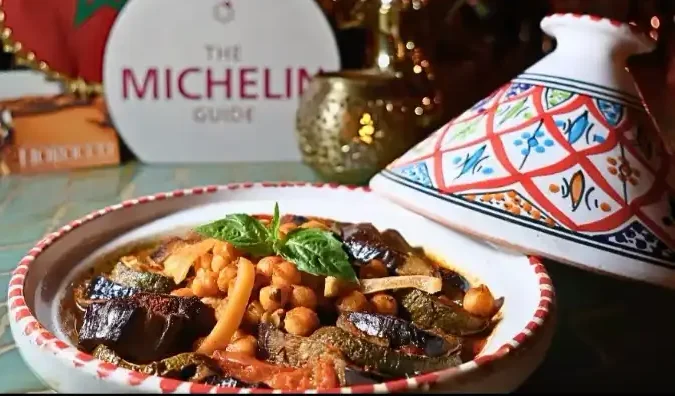
Vegetable Tagine
Seasonal vegetables slow-cooked with preserved lemon, olives, and a spiced broth. Naturally gluten-free. Our most popular plant-based dish.
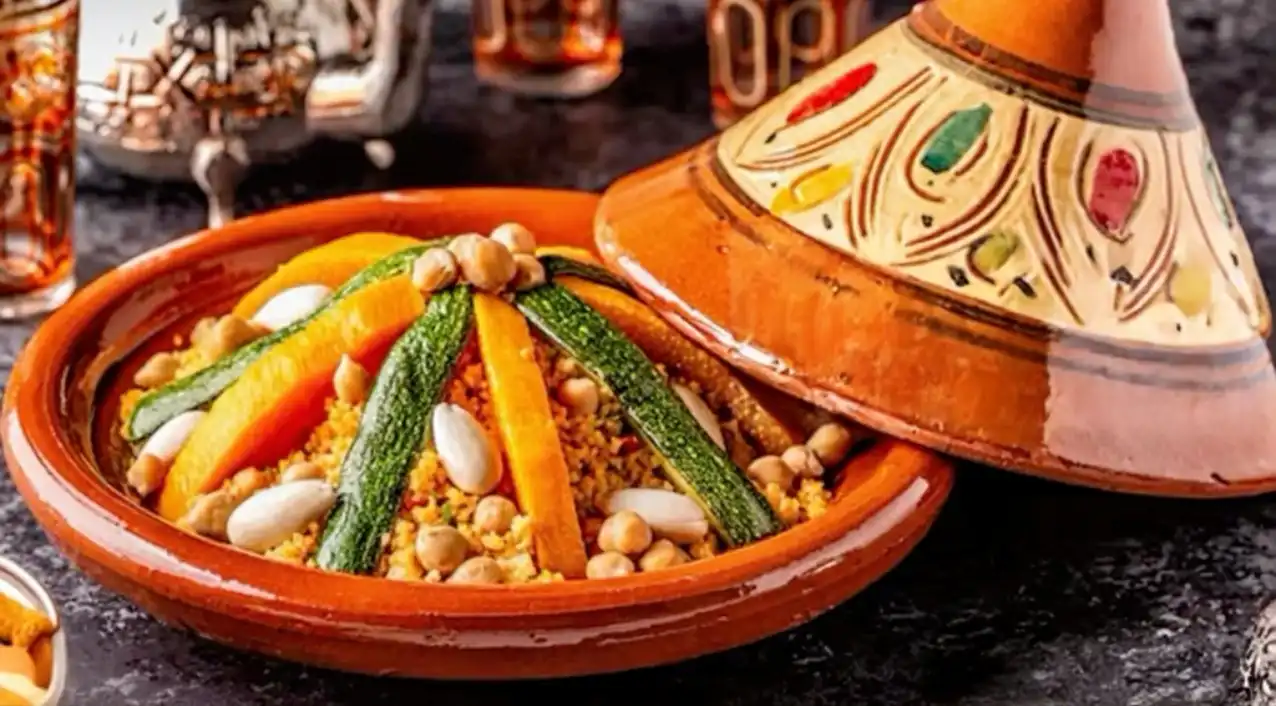
Vegetable Couscous
Twice-steamed couscous with chickpeas, root vegetables, and a fragrant broth. Filling and fully plant-based.
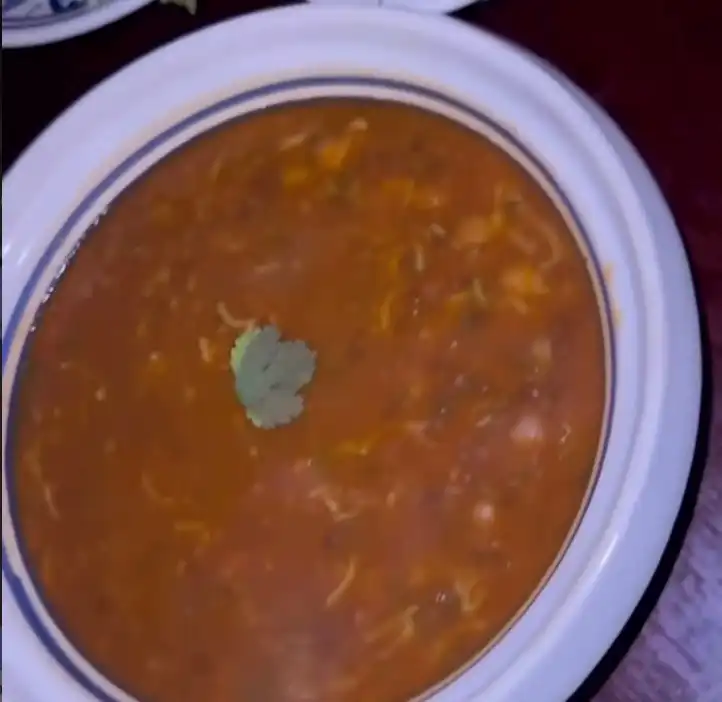
Harira Soup
Morocco's classic lentil and chickpea soup. Herb-rich, warming, and completely vegan. A good way to open the meal.
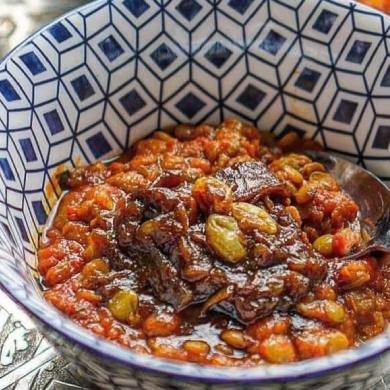
Zaalouk & Salads
Traditional Moroccan starters — several are vegan. Ask your server. Worth sharing around the table.
Open every day,
from 11:30
Walk-ins welcome for lunch on most weekdays. Friday evenings and weekends fill up — we recommend booking ahead. The belly dance and live music performances run Thursday through Sunday.
Questions about
how it's made
Answers about Moroccan cooking techniques, ingredients, and what makes each dish distinct. For anything else, call us on (604) 841-1182 or email bookmoroccan@gmail.com.
Yes — entirely. Every piece of meat we serve is halal certified, hormone-free, and antibiotic-free. Our kitchen is fully halal. If you have questions about a specific dish or ingredient, just ask — our staff can walk you through it.
A tagine is a traditional Moroccan clay pot with a tall, cone-shaped lid. As the food cooks, steam rises, condenses on the inside of the lid, and falls back down — continuously basting everything without any added fat or oil. The result is meat that's deeply tender and vegetables with concentrated, unmuddied flavour. We use authentic clay tagines, not steel pots with a lid on top.
For lamb tagine, a medium-bodied red with soft tannins — a Syrah or southern Rhône blend works beautifully. For chicken dishes or couscous, try a lightly oaked white or a dry rosé; they complement the spicing without overwhelming it. Our bar team is happy to suggest something from the wine list when you visit.
Yes — several. Vegetable tagine, vegetable couscous, and harira soup are all fully vegan. We also have Moroccan salads and starters, several of which are plant-based. These aren't substitutions or afterthoughts — they're dishes that have always been part of the Moroccan tradition.
Walk-ins are welcome most weekday lunchtimes. On weekends and Friday evenings we recommend booking ahead — it fills up, particularly when there's a live performance on. You can reserve online or call us at (604) 841-1182.
Pastilla — also called basteeya — is one of Morocco's oldest dishes. Spiced chicken with toasted almonds and egg, wrapped in flaky warqa pastry and finished with cinnamon and icing sugar. Sweet and savoury at the same time. It surprises most people who try it for the first time. We make ours by hand every day.
The core spices in Moroccan cooking are cumin, coriander, turmeric, ginger, cinnamon, and saffron. Many dishes are built around a blend called ras el hanout — a term meaning "head of the shop," referring to a merchant's best spices. The exact blend varies by region and household. Preserved lemon, oil-cured olives, and harissa are also foundational flavouring ingredients across the Moroccan kitchen.
A traditional lamb tagine cooked from raw typically takes 2–3 hours over low to medium heat. The low, sustained temperature is what distinguishes tagine cooking from other braising methods — rushing it results in tougher meat and a thinner, less developed sauce. The clay pot plays an active role: it heats slowly, holds heat evenly, and allows the steam condensation cycle to work at the correct pace.
Moroccan cuisine belongs to the Maghrebi culinary tradition of North Africa and developed independently from Middle Eastern cooking. Key differences include the use of clay-pot slow cooking, specific North African spice blends such as ras el hanout and chermoula, and a characteristic combination of sweet and savoury flavours — most evident in dishes like pastilla, where cinnamon and icing sugar finish a spiced meat filling.
Taste authentic Moroccan cooking
prepared the traditional way
Clay tagines. Twice-steamed couscous. Hand-wrapped pastilla.
Halal certified · Michelin Recommended · Open daily from 11:30 AM